Introduction
A character reference letter is a powerful endorsement of a person’s integrity, values, and reliability. Unlike professional references that focus on job performance, a character reference speaks to who someone is as a person—how they behave, treat others, and handle responsibility.
Whether it’s needed for a job, court matter, rental application, immigration process, or community role, a well-written character reference letter can make a meaningful difference.
What Is a Character Reference Letter?
A character reference letter (also called a personal reference letter) is written by someone who knows the individual personally rather than professionally. It highlights:
- Honesty and integrity
- Reliability and responsibility
- Interpersonal behavior
- Community involvement
- Overall character and values
It is commonly requested for:
- Job applications
- Court or legal matters
- Tenant or rental applications
- Immigration cases
- Volunteering or community roles
Who Can Write a Character Reference Letter?
A strong character reference should be written by someone credible who knows the person well, such as:
- A family friend
- Neighbor
- Teacher or mentor
- Community leader
- Religious or social organization member
Avoid immediate family unless explicitly allowed.
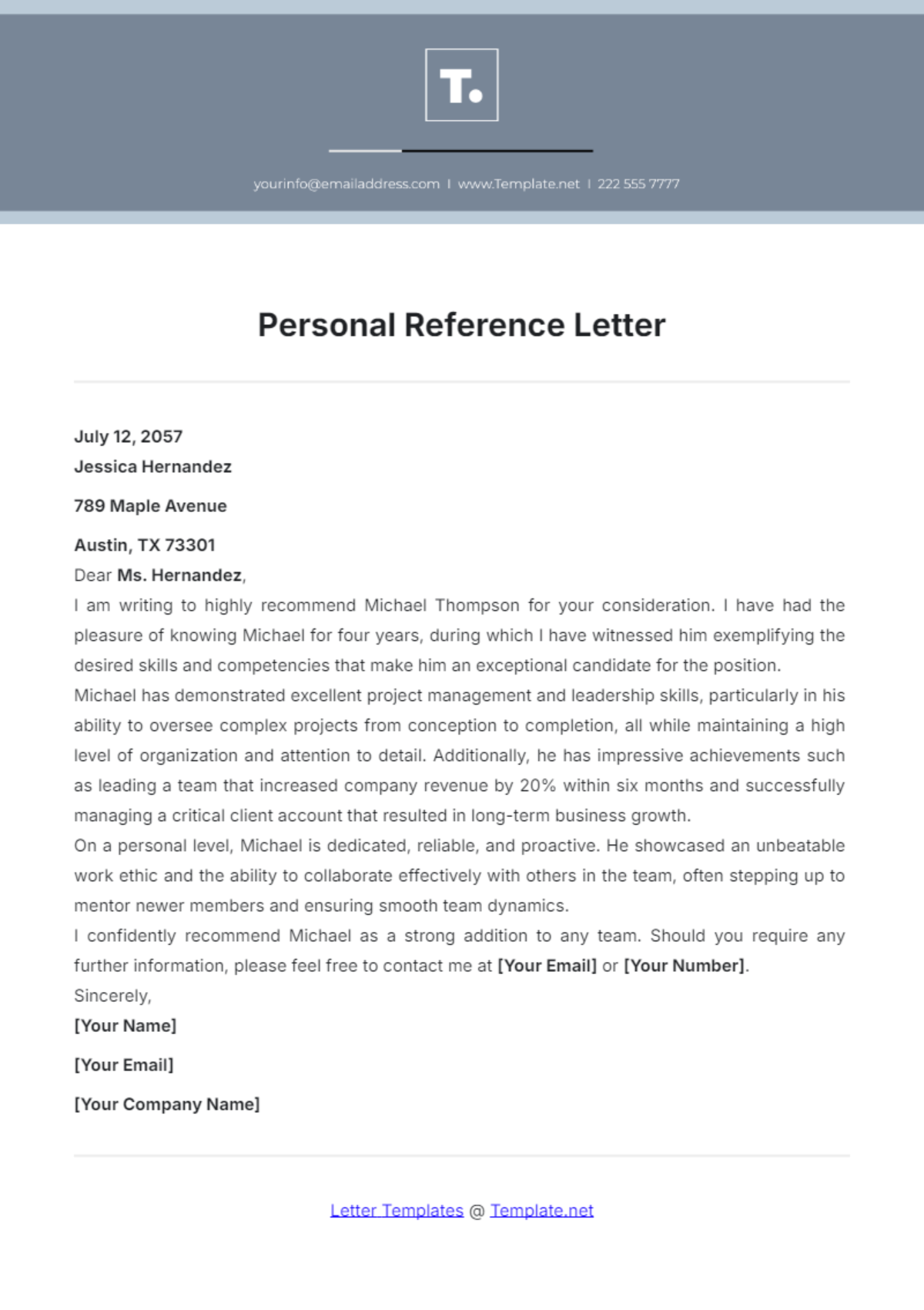
Character Reference Letter Format (Standard)
A clear, professional format includes:
- Date
- Writer’s name and contact details
- Salutation
- Relationship to the person
- Length of acquaintance
- Description of character traits with examples
- Statement of recommendation
- Closing and signature
Keep it concise—ideally one page.
How to Write a Character Reference Letter (Step-by-Step)
1. Start with a Polite Introduction
State who you are and your relationship with the person.
Example:
“I am writing this letter to provide a character reference for [Name], whom I have known for over five years as a neighbor and family friend.”
2. Explain How Long and How Well You Know Them
This establishes credibility.
Example:
“I have interacted with [Name] regularly and have observed their conduct in both personal and community settings.”
3. Describe Positive Character Traits
Focus on traits relevant to the situation, such as:
- Honesty
- Dependability
- Respectfulness
- Kindness
- Responsibility
4. Provide Real Examples
Specific examples make the letter more convincing.
Example:
“During a community event, [Name] volunteered their time to coordinate activities and ensured everything ran smoothly.”
5. Clearly Recommend the Person
Be direct and confident.
Example:
“I strongly recommend [Name] and believe they will be a positive and trustworthy presence.”
6. Close Professionally
Offer to provide further information and include your signature.
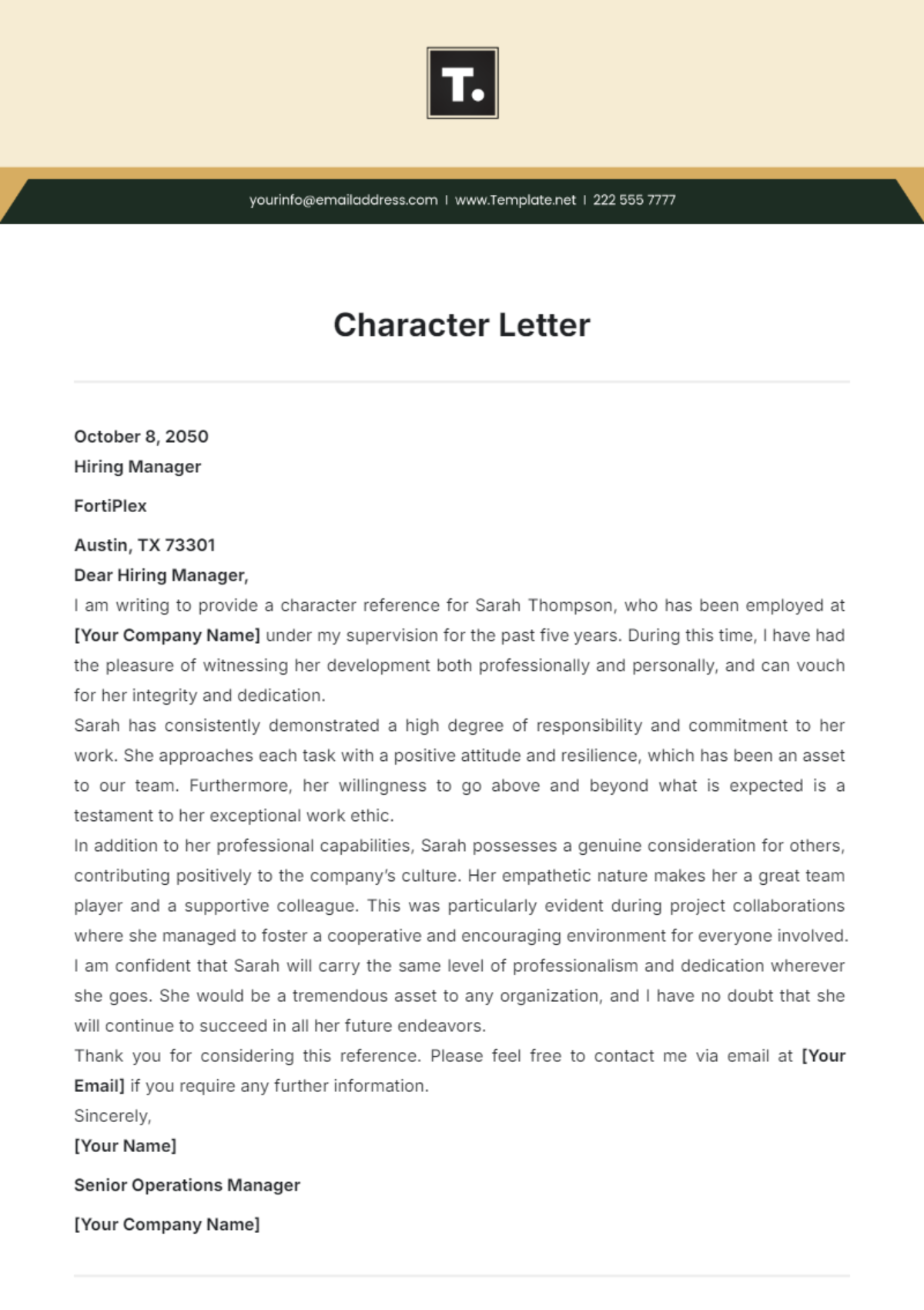
Character Reference Letter Example (General)
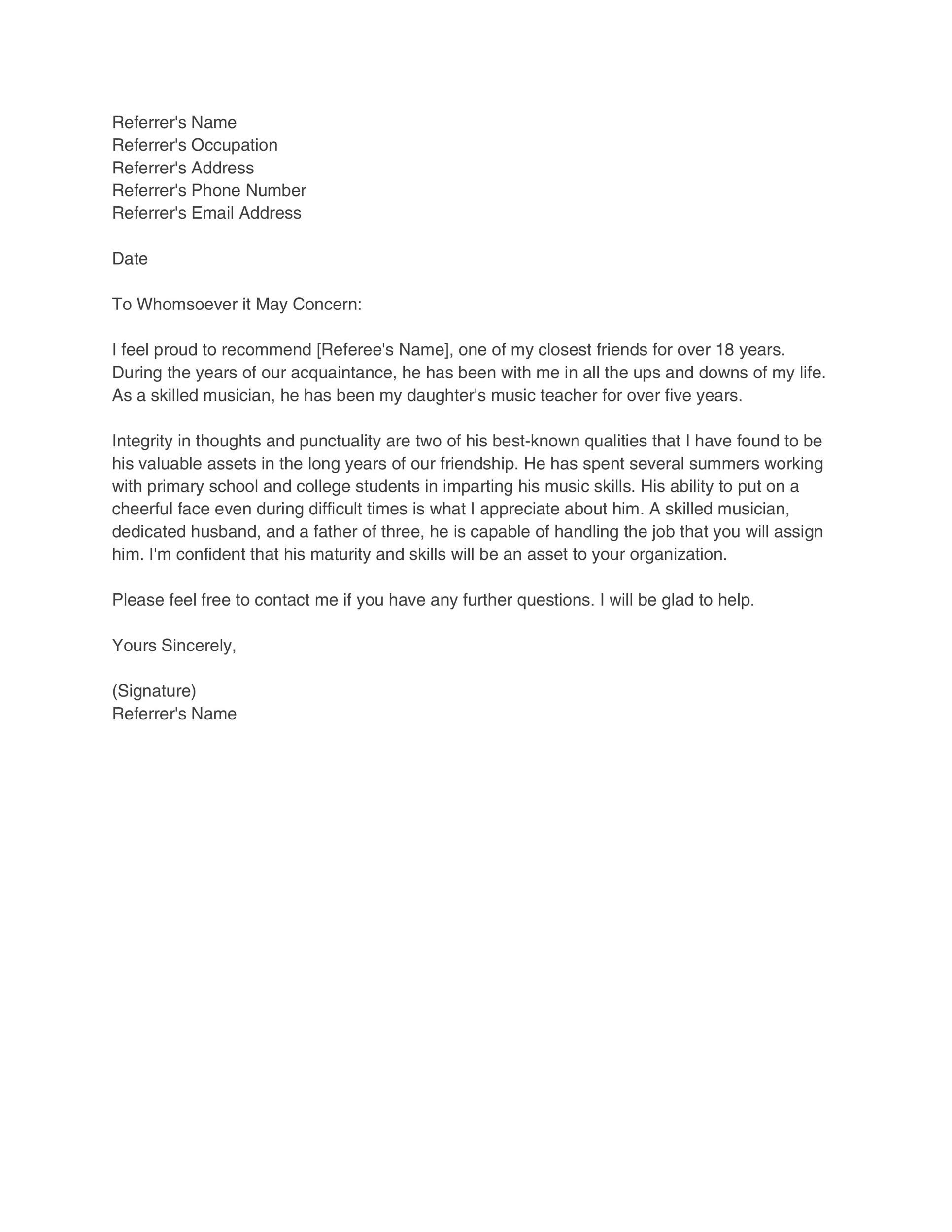
Dear Sir/Madam,
I am writing to provide a character reference for [Name], whom I have known for [number] years. During this time, I have found [Name] to be honest, dependable, and respectful in all interactions.
[Name] consistently demonstrates responsibility and integrity, whether in personal commitments or community involvement. They are well-regarded by those around them for their positive attitude and willingness to help others.
I strongly recommend [Name] and am confident they will be a valuable and trustworthy individual in any situation. Please feel free to contact me if further information is required.
Yours sincerely,
[Your Name]
[Contact Information]
Character Reference Letter Example for Court
Dear Sir/Madam,
I am writing this letter in support of [Name], whom I have known personally for several years. Throughout this time, I have known [Name] to be respectful, responsible, and considerate of others.
In my experience, [Name] has shown remorse, accountability, and a genuine desire to act responsibly. I believe this situation does not reflect their true character.
I respectfully request that you consider this letter as a testament to [Name]’s character.
Sincerely,
[Your Name]
Tips for Writing an Effective Character Reference Letter
- Be honest and factual
- Keep the tone respectful and professional
- Tailor the content to the purpose
- Avoid exaggeration
- Proofread carefully
A sincere, balanced letter carries more weight than excessive praise.
Common Mistakes to Avoid
- Being too vague
- Writing an overly long letter
- Including irrelevant personal details
- Using informal language
- Forgetting contact information
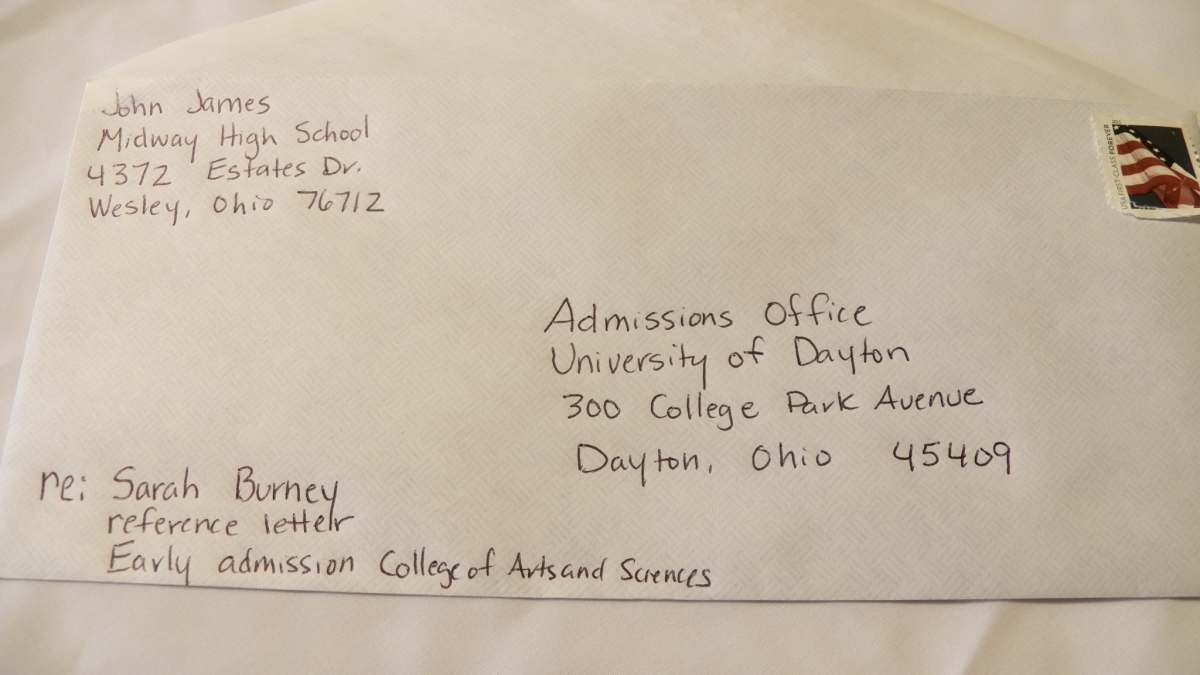
Submitting a Character Reference Letter

4
Many character reference letters are submitted digitally. However, physical character reference letters are often required or preferred for:
- Court proceedings
- Immigration documentation
- Government or legal matters
- Formal verifications
With PostPatra, you can:
- Write or upload a character reference letter online
- Format it professionally
- Print and deliver it anywhere in India
- Avoid visiting the post office
- Track delivery easily
This ensures your reference is delivered reliably and respectfully.
FAQs
1. How long should a character reference letter be?
One page is ideal.
2. Can a family member write a character reference letter?
Only if explicitly allowed; otherwise, a non-family member is preferred.
3. Should a character reference letter be notarized?
Usually no, unless required by a court or authority.
4. Can a character reference letter be handwritten?
Typed letters are preferred for clarity and professionalism.
5. Can I send a character reference letter by post?
Yes. Physical submission is common for legal and formal purposes.
Conclusion
A character reference letter is more than a formality—it is a statement of trust. When written with honesty, clarity, and respect, it can positively influence important decisions in someone’s life.
Whether submitted online or delivered as a formal physical letter through PostPatra, a well-crafted character reference reflects credibility, care, and responsibility.
Sometimes, your words can speak louder than credentials.
Leave a Reply